Hand-Release Push-Up Arm Extension (HRP) Training Guide
Train the 2026 Army Fitness Test (AFT) Hand-Release Push-Up Arm Extension (HRP) with clean repetition volume, two-minute pacing, and pressing endurance work.
If you add a third upper-body session, keep it light and use it for supporting strength.
Your two main sessions have different jobs:
Session A builds clean repetition volume.
Session B builds pace and the ability to keep moving for two minutes.
Keep both sessions below max effort.
ArmyFitHub HRP Training at a Glance
Frequency
2 sessions per week
Volume day
HRP — 5 clean working sets
Pace day
4 × 30 seconds, then longer blocks
Set rest
60–90 seconds for volume work
Progression
Add a small amount of work only when reps stay clean
One-day option
Prioritize clean HRP sets, then one short pace block
Build two-minute repeatability without spending every session at failure.
ArmyFitHub weekly plan: use one clean-volume session and one pace-focused session each week.
Session A — Clean Volume
HRP — 5 working sets
Rest 60–90 seconds between sets.
Choose a set size that leaves about 2–3 clean repetitions in reserve.
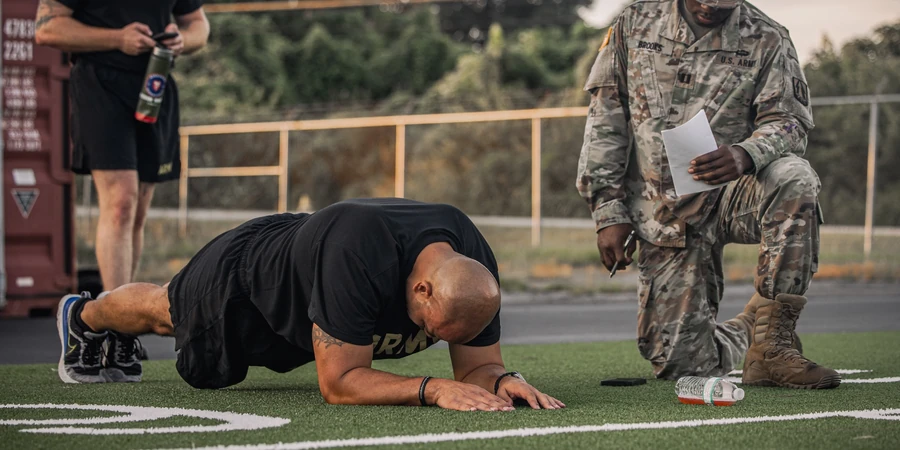
Every repetition should use the same full T-extension, body position, press, and lockout you expect to use on test day.
At the bottom of each repetition, extend both arms into the T position. The arms and hands may touch or slide along the ground. Review the full movement standard in the official HRP event reference.
If you can do 20 clean HRPs when fresh, your training sets might initially be closer to 8–12 than 18–20.
The exact number matters less than this rule:
Stop the set before your repetition changes.
Then choose one pressing exercise from the Army training section below.
A simple option is:
Supine Chest Press — 2–3 sets of controlled higher-repetition work
Use a load that lets you keep the same pressing path from the first repetition to the last.
Finish with:
Quadraplex — 2–3 controlled sets
Keep the trunk still and move deliberately. This is support work for body control, not a speed exercise.
Session B — Pace and Density
Use short blocks before longer work.
A good starting point is:
HRP — 4 × 30 seconds
Rest 60 seconds between rounds.
Use a pace you can repeat across all four rounds.
If the first round has 12 clean repetitions and the last has 6, the opening pace is too aggressive for this workout.
When all four rounds stay consistent, progress to longer work periods.
For example:
2 × 60 seconds
Rest 2–3 minutes between rounds.
Use the full two-minute effort as a periodic check, not a routine session.
After the HRP work, use one Army-listed assistance exercise such as the 8-Count T Push-Up or Incline Bench.
Keep the assistance work controlled so your shoulders and triceps recover for the next session.
How to Choose Your HRP Training Reps
Choose a number you can repeat while keeping:
the same hand position;
a full T-extension;
the body moving as one unit;
a full press;
and a consistent finish.
For the current scored movement and test-day standard, use the official HRP event reference above.
End the set with about 2–3 clean reps still available. Build volume without letting the T-extension, body alignment, or lockout change.
FM 7-22 uses RPE and repetitions in reserve to manage training effort.
How to Progress Your HRP
Change one training variable at a time.
If all five volume sets are clean, add a small number of repetitions next session.
For example:
5 × 8 can become 5 × 9.
For the pace session, either add repetitions at the same work interval or make the work interval slightly longer.
Change only one of repetitions, work time, or rest in a progression step.
Use this rule:
Reps stay clean and consistent
→ Add a small amount of work.
The final set slows but technique stays good
→ Keep the same workload and repeat it.
T-extension, lockout, or body position starts changing
→ Reduce the set size or increase rest.
Performance gets worse across several sessions
→ Reduce volume and check recovery before adding more work.
If performance is unchanged, repeat the same workload next session.
Why Train the HRP This Way?
The AFT HRP gives you two minutes to complete as many correct repetitions as possible. Confirm the current duration and movement standard in ATP 7-22.01 before test week.
The Army identifies muscular endurance as the primary fitness component in U.S. Army AFT guidance. HRP preparation therefore combines clean volume, pace work, and pressing/trunk support.
FM 7-22 uses higher-repetition work and controlled load, rest, and recovery to train muscular endurance. The Army also lists the Supine Chest Press, 8-Count T Push-Up, Incline Bench, and Quadraplex for HRP preparation. Keep the HRP first, then add one support exercise.
If You Only Have One HRP Day Per Week
Start with the test movement:
Hand-Release Push-Up — 5 working sets
Keep about two clean repetitions in reserve and rest 60–90 seconds.
Add:
2 × 30–60 seconds of controlled HRP pace work
Use enough rest between rounds to keep the second round clean.
Add the pace rounds only while the HRP movement is still clean.
Then choose one Army-listed support exercise.
For example:
Supine Chest Press for pressing endurance;
8-Count T Push-Up for total-body push and reach control;
Incline Bench for additional pressing strength and endurance;
or Quadraplex for trunk and shoulder control.
If You Are New to the HRP
Start with small sets.
First make the repetition consistent.
If you can only perform a few clean HRPs, use those clean repetitions as the main practice.
When your position fails after rep 4, perform several sets of 3–4 with enough rest to reset.
Add easier pressing work afterward to build more upper-body volume. Once clean HRPs feel automatic, add total repetitions, then pace work.
How to Get More HRP Reps
Identify what breaks down first: pace, body position, the T-extension/press transition, or pressing strength.
If pace drops in the second minute: control the first 30–60 seconds during pace work. Use the fastest rate you can keep without losing correct repetitions across the interval.
If body position breaks first: reduce the set size. If your hips sag on repetition 10, repeatedly forcing rep 15 practices the position you are trying to avoid. Stop earlier, rest, and repeat a clean set. Use Quadraplex and other controlled trunk work to keep the torso organized while the arms work.
If the T-extension or press slows: use shorter sets with crisp transitions and enough rest to reset. During training, track when cadence breaks down or the press loses speed; that point tells you more than the first ten repetitions.
If pressing strength is the limiter: keep the HRP first, then add one Army-listed pressing exercise such as Supine Chest Press or Incline Bench.
If You Have No Equipment
HRP-specific practice needs only a level training surface.
You can train:
clean HRP volume;
short timed intervals;
occasional full two-minute effort;
8-Count T Push-Ups;
and Quadraplex.
Dumbbells and a bench add options for Supine Chest Press and Incline Bench.
How Often Should You Test a Full Two-Minute HRP?
Use a full two-minute HRP occasionally to check total reps, opening pace, late-set slowdown, and repetition quality.
Between tests, return to volume and pace work. Frequent max attempts add fatigue without adding much training volume.
The Week Before Your AFT
Reduce HRP volume during the final week. Keep one short early-week session with familiar reps and pace, then prioritize recovery. HRP is event two, with SDC, PLK, and 2MR still to follow.
Common HRP Training Mistakes
Doing a two-minute max every session. Testing tells you where you are. Submaximal training gives you more opportunities to improve it.
Starting every set too fast. Practice a pace you can keep after the first burst of energy is gone.
Counting bad repetitions as training volume. If the T-extension, body position, or press has changed, the set has already gone too far.
Only doing push-ups. Add one Army-listed pressing or trunk exercise after HRP work to build the quality that limits you.
Adding reps and reducing rest at the same time. Change one variable, then see whether you can still maintain the movement.
Ignoring recovery. If your HRP numbers and technique are getting worse from session to session, adding more volume is unlikely to fix the problem.
HRP Training Questions
Should I test a full two-minute HRP every week?
No. Use a full effort occasionally to check pace, repetition quality, and late-set fatigue. Use the other sessions to build clean volume and repeatable density.
What should I do if my pressing strength is the limiter?
Practice the HRP first, then add one controlled pressing exercise such as the Supine Chest Press or Incline Bench.
What if I only have one training day?
Use five clean HRP sets with 60–90 seconds of rest, then add two short 30–60 second pace rounds only while the movement stays clean. Choose one support exercise after the HRP work.
How should I change HRP training before the AFT?
Reduce HRP volume during the final week, keep one short early-week practice with familiar reps and pace, and prioritize recovery for the remaining events.
Personalized AFT Plan
Build a complete 5-event AFT training plan
Start with your AFT assessment, then get a personalized AFT training plan PDF created from your scores, target, training availability, equipment, and test timing.
The PDF covers all five AFT events, with HRP included as training context.
Your personalized plan uses your five event scores, schedule, and equipment to decide how much HRP work belongs in each week—and when another AFT event needs more attention.
Start My AFT Plan $24.99 one-time · Reviewed before PDF delivery · Secure PDF by email · Delivered within 24 hours after Plan Setup
The Army lists the Supine Chest Press as a movement for the chest, shoulders, and triceps and for upper-body muscular strength and endurance. That pressing capacity supports the HRP’s repeated push and full-range arm-extension demands without turning every training session into a max-repetition test.
How to Perform the Supine Chest Press
1Lie on your back with the knees bent about 90 degrees and the feet flat and slightly apart; keep the head and backs of the upper arms on the ground.
2Hold the weights in front of the shoulders with the forearms vertical, then extend the elbows to raise them under control.
3Stop with the arms straight but not locked, then lower back to the starting position before repeating.
Key Cues for the Supine Chest Press
Keep the head on the ground.
Keep the weights controlled and parallel as the elbows extend.
Do not lock the elbows at the top.
Common Mistakes in the Supine Chest Press
Lifting the head or changing the floor-supported position.
Locking the elbows or losing control of the weights at the top.
The Army describes the Eight Count T Push-Up as a total-body strength, endurance, and mobility drill, with the T position emphasizing full push and reach motions. That reinforces the HRP’s upper-body endurance, trunk control, and repeatable full-range movement.
How to Perform the 8-count T Push-up
1From the position of attention, squat and kick the legs back to the front leaning rest position.
2Lower the body as one unit, release the hands, extend the arms into a T, return the hands beneath the shoulders, and press back up.
3Use the reverse thrust to return to the squat and stand at attention before the next repetition.
Key Cues for the 8-count T Push-up
Use the slow, deliberate cadence shown in the Army drill.
Extend both arms fully into the T position.
Keep the trunk controlled while lowering and pressing.
Common Mistakes in the 8-count T Push-up
Skipping the full T position or losing the required arm extension.
Rushing the cadence and losing control of the trunk.
Army guidance identifies the Incline Bench as a free-weight exercise for upper-body muscular strength and endurance that requires trunk and shoulder stability. Those qualities support the HRP by building pressing strength while teaching the athlete to keep the trunk and shoulder position organized under load.
How to Perform the Incline Bench
1Set the bench to an incline and keep the feet on the ground with the hips, shoulders, and head firmly against the bench.
2Use a closed overhand grip slightly wider than shoulder width and start with the weight above the chest and the elbows extended.
3Lower the weight just above the chest, press it back up, and repeat with the bench contact and trunk position maintained.
Key Cues for the Incline Bench
Keep the hips, shoulders, and head against the bench.
Lower under control instead of jerking or shrugging.
Keep the back flat and the hips on the bench.
Common Mistakes in the Incline Bench
Arching the back or allowing the hips to rise from the bench.
Jerking or shrugging the shoulders during the press.
The Army places the Quadraplex in Four for the Core to improve balance, coordination, and posterior-chain core strength. Those qualities support the HRP by helping the trunk stay organized during repeated push-ups and hand-release transitions.
How to Perform the Quadraplex
1Begin in a six-point position with the knees beneath the hips and the head aligned with the spine.
2Raise one hand and the opposite leg until both are straight and parallel to the ground.
3Stay tall on the supporting shoulder, then return with control and repeat on the opposite side.
Key Cues for the Quadraplex
Keep the head aligned with the spine.
Prevent the low back, shoulder, and trunk from sagging.
Move slowly enough to keep balance and coordination.
Common Mistakes in the Quadraplex
Letting the low back or trunk sag while the limbs are raised.
Rotating away from the supporting shoulder instead of controlling the position.
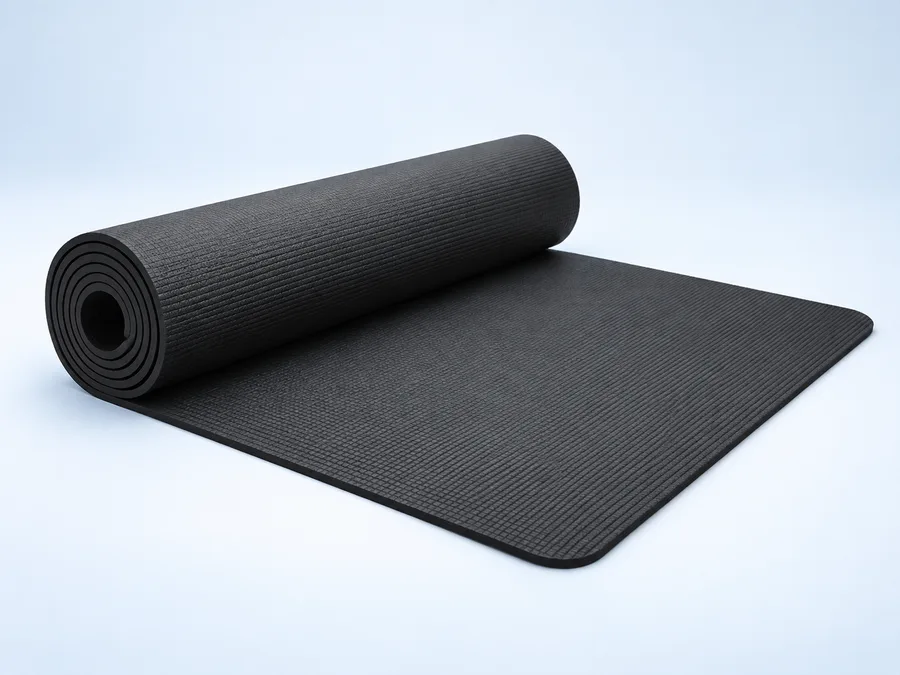
HRP-specific practice needs only a level surface. Dumbbells and a bench add options for Army-listed pressing work; a mat is optional for floor training.