2026 Army Fitness Test (AFT) Events

The 2026 Army Fitness Test (AFT) consists of five events: Three-Repetition Maximum Deadlift (MDL), Hand-Release Push-Up Arm Extension (HRP), Sprint-Drag-Carry (SDC), Plank (PLK), and Two-Mile Run (2MR).

Use this reference to understand what each event tests, how it is performed, and what to expect on test day.

The Army Fitness Test (AFT) replaced the Army Combat Fitness Test (ACFT) as the official physical fitness test of record on June 1, 2025. This page covers the current five-event AFT; see the Army Fitness Test overview for current scope.

AFT Overview Demonstration

Watch the National Guard demonstration of the five-event AFT structure.

Overview
Five-event reference

The 5 AFT Events at a Glance

The AFT is administered in this order: MDL → HRP → SDC → PLK → 2MR.

EventWhat it testsRecorded result
Three-Repetition Maximum Deadlift (MDL)
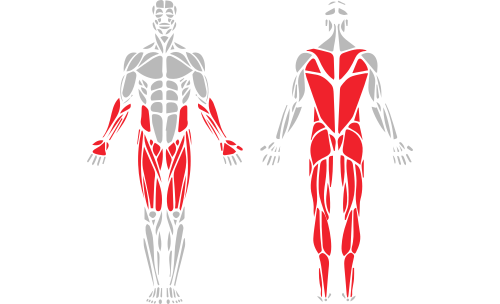
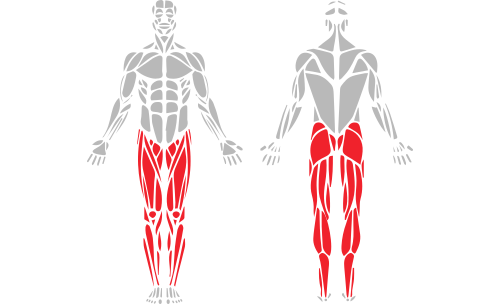
U.S. Army diagram highlighting the muscle groups and fitness components assessed by the Three-Repetition Maximum Deadlift (MDL)
Primary fitness components
Muscular strength
Secondary fitness components
Balance · Flexibility
Heaviest successful 3-rep lift · lb
Hand-Release Push-Up Arm Extension (HRP)
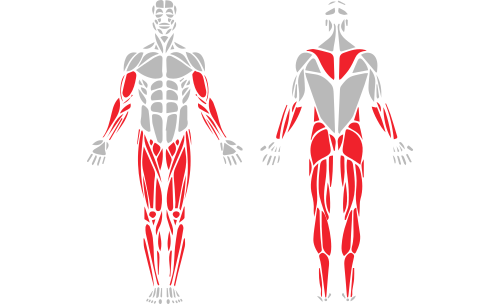
U.S. Army diagram highlighting the muscle groups and fitness components assessed by the Hand-Release Push-Up Arm Extension (HRP)
Primary fitness components
Muscular endurance
Secondary fitness components
Flexibility
Correct reps in 2 minutes
Sprint-Drag-Carry (SDC)
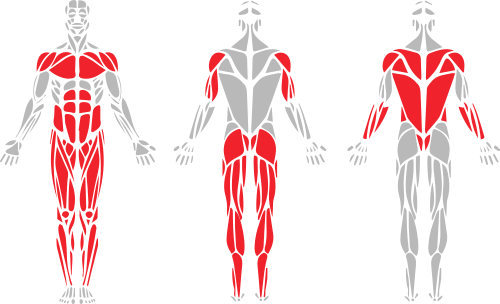
U.S. Army diagram highlighting the muscle groups and fitness components assessed by the Sprint-Drag-Carry (SDC)
Primary fitness components
Muscular endurance · Muscular strength · Anaerobic power · Anaerobic endurance
Secondary fitness components
Balance · Coordination · Agility · Flexibility · Reaction time
250-meter total time
Plank (PLK)
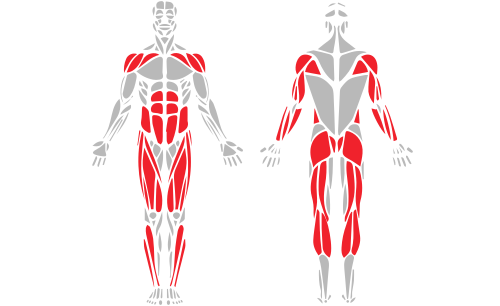
U.S. Army diagram highlighting the muscle groups and fitness components assessed by the Plank (PLK)
Primary fitness components
Muscular endurance
Secondary fitness components
Balance
Plank hold time
Two-Mile Run (2MR)
U.S. Army diagram showing the fitness component assessed by the Two-Mile Run (2MR)
Primary fitness components
Aerobic endurance
Two-mile total time
MDL / 01

Three-Repetition Maximum Deadlift (MDL)

The Three-Repetition Maximum Deadlift measures lower-body, grip, and core strength under load.

Test-Day Standard

Repetitions
Three continuous repetitions make a successful attempt.
Equipment
Hex bar / trap bar; the result is recorded in pounds.
Attempts
Two MDL attempts are allowed. After a successful first attempt, the second attempt may use a higher weight. After a failed first attempt, use a lower weight unless ATP 7-22.01 permits the same weight for the specific failure condition; a safety stop on repetition two or three may be retried at the same or a lower weight.
Recorded result
The heaviest successful attempt is recorded as the raw score.

Key Rules

  • Use a closed grip, feet shoulder width apart, fully extended arms, a flat back, and heels in contact with the ground.
  • Keep the bar and body controlled through the lift, return, and ground contact between repetitions.

Common Test-Day Questions

What should I choose for my first attempt?
Choose the weight you intend to lift for the first attempt and arrange yourself behind it before the event begins.
What can I do after my first attempt?
After a successful first attempt, you may choose one higher weight. After a failed first attempt, you may retry at the same or a lower weight.
Which MDL result is recorded?
The heaviest successful three-repetition attempt is recorded as the raw result.

Official Army Demonstration

Watch the U.S. Army demonstration of this event.

How to Perform the MDL

Originally published during the ACFT eraThis Army demonstration covers an event that remains part of the current AFT. Use the current test-day rules on this page.
Watch on YouTube

Preparation

On “GET SET,” step inside the hex bar with feet shoulder width apart, locate the middle of the handles, and take a closed grip. Set the arms fully extended, back flat, head aligned with the spine, and heels on the ground.

Upward movement

On “GO,” extend the hips and knees to lift the bar into the Straddle Stance. Keep the hips from rising ahead of or above the shoulders, keep the feet in place, and keep the movement balanced and controlled.

Downward movement

Lower the bar to the ground under control while maintaining a straight back. Place the bar down rather than dropping it; the plates must touch the ground before the next repetition.

Not sure where your MDL stands?

Calculate your AFT score first to see your event score and biggest scoring gap.

HRP / 02

Hand-Release Push-Up Arm Extension (HRP)

The Hand-Release Push-Up Arm Extension measures upper-body muscular endurance across a full-range repetition.

Test-Day Standard

Duration
Two minutes; complete as many correct repetitions as possible.
Equipment
Level surface.
Movement
Push, lower, release the hands into a T, and return the hands to the start position.
Recorded result
Number of correct repetitions completed in two minutes.

Key Rules

  • A repetition requires the body to move as one unit with the elbows fully extended.
  • The chest, hips, thighs, and toes return to the ground before both hands release to the T position.
  • Return both hands beneath the shoulders before the next repetition; incomplete movement does not count.

Common Test-Day Questions

What rest position is authorized?
The front-leaning-rest position is the only authorized rest position.
Can I pause or rest on the ground?
No. You cannot pause or rest on the ground; moving out of the front-leaning-rest position while at rest terminates the event.
What happens if I lift a hand or foot?
Placing a knee on the ground or lifting a hand or foot in the up position terminates the event.
What hand and foot adjustments are allowed?
Feet must remain on the ground, and the hands must return beneath the shoulders to complete each repetition.

Official Army Demonstration

Watch the U.S. Army demonstration of this event.

How to Perform the HRP

Originally published during the ACFT eraThis Army demonstration covers an event that remains part of the current AFT. Use the current test-day rules on this page.
Watch on YouTube

Starting position

Begin prone on a level surface with hands flat and index fingers inside the outer edges of the shoulders. Keep the chest, front of the hips and thighs, and toes on the ground; feet stay within a boot width.

Push and lower

On “GO,” push the body up as one unit to the front-leaning-rest position with the elbows fully extended, then lower the body as one unit until the chest, hips, and thighs touch the ground together.

Hand release and return

Without moving the head, body, or legs, extend both arms out to the sides into the T position. Immediately return the hands beneath the shoulders to complete the repetition.

Not sure where your HRP stands?

Calculate your AFT score first to see your event score and biggest scoring gap.

SDC / 03

Sprint-Drag-Carry (SDC)

The Sprint-Drag-Carry combines short-duration speed, loaded movement, strength, and repeated high-intensity work.

Test-Day Standard

Format
Five 50-meter shuttles: sprint, drag, lateral, carry, and sprint.
Time limit
Four minutes; time stops after the final sprint crosses the start line.
Equipment
Two 40-pound kettlebells and a 90-pound sled.
Recorded result
Elapsed time for the 250-meter sequence.

Key Rules

  • Complete the official sequence: sprint, drag, lateral movement, carry, and final sprint.
  • Touch the 25-meter turn line with the foot and hand as directed during the turns.
  • Carry both 40-pound kettlebells to the turn line and back, place them down after crossing the start line, and finish the final sprint.

Common Test-Day Questions

What is the official SDC sequence?
Complete five 50-meter shuttles in this order: sprint, drag, lateral, carry, and final sprint.
What must happen at the turn line?
Touch the 25-meter turn line with the required foot and hand during the sprint and lateral portions, and move the sled fully across the line during the drag.
What happens if a required line action is missed?
The grader calls the Soldier back to correct a missed sprint touch or sled crossing before continuing.
When does the SDC time stop?
Time stops when the final sprint crosses the start line after the full sequence is complete.

Official Army Demonstration

Watch the U.S. Army demonstration of this event.

How to Perform the SDC

Originally published during the ACFT eraThis Army demonstration covers an event that remains part of the current AFT. Use the current test-day rules on this page.
Watch on YouTube

Sprint

Start prone behind the line. On “GO,” stand and sprint 25 meters, touch the turn line with a foot and hand, then return to the start line.

Drag and lateral

Pull the sled backward through the 25-meter turn and back across the start line. Then move laterally to the turn line and back while facing the same direction and touching the line as directed.

Carry and finish

Carry the two kettlebells to the turn line and back, place them down after crossing the start line, then complete the final 25-meter out-and-back sprint. Time stops when the final crossing is complete.

Not sure where your SDC stands?

Calculate your AFT score first to see your event score and biggest scoring gap.

PLK / 04

Plank (PLK)

The Plank measures trunk muscular endurance and the ability to maintain whole-body alignment under fatigue.

Test-Day Standard

Duration
Hold the required plank position for as long as possible.
Equipment
Level surface.
Position
Forearms and hands or fists stay in contact with the floor while the body remains aligned head to heels.
Recorded result
Elapsed hold time before the position is terminated.

Key Rules

  • On “GO,” maintain the required straight-line position from head to heels.
  • Keep the feet, forearms, and hands or fists in contact with the floor throughout the hold.
  • The event ends when the position cannot be corrected or a termination condition occurs.

Common Test-Day Questions

Which contact points must stay on the floor?
The feet, forearms, and hands or fists must remain in contact with the floor.
Can I change my hand position?
Yes. You may change from fists or the pinky-side position to palms down as long as the hands remain in contact with the floor.
What happens after a position warning?
The grader gives one verbal warning to correct a position failure or hand or foot slide; failure to correct or maintain the position terminates the performance.
What terminates the plank?
The performance terminates if another body part touches the ground, a hand or foot is raised, or the straight-line position cannot be maintained.

Official Army Demonstration

Watch the U.S. Army demonstration of this event.

How to Perform the PLK

Originally published during the ACFT eraThis Army demonstration covers an event that remains part of the current AFT. Use the current test-day rules on this page.
Watch on YouTube

Get ready

Place the hands or fists on the ground with elbows aligned under the shoulders and forearms forming a triangle. Begin with the knees on the ground and the feet positioned no more than a boot width apart.

Set the position

On “GET SET,” lift both knees and bring the hips into line with the shoulders, head, and legs. On “GO,” establish the proper plank with the body aligned from head to heels.

Hold to standard

Keep the feet, forearms, and hands or fists in contact with the floor and maintain the straight-line position. The event ends when the position cannot be corrected or a termination condition occurs.

Not sure where your PLK stands?

Calculate your AFT score first to see your event score and biggest scoring gap.

2MR / 05

Two-Mile Run (2MR)

The Two-Mile Run measures aerobic endurance and the ability to sustain a demanding pace over a measured course.

Test-Day Standard

Distance
Two miles for time.
Course
Measured and generally flat; indoor or outdoor tracks and improved surfaces are authorized, but unimproved terrain is not.
Course format
Out-and-back and lap courses are authorized, with the start and finish near the other test-event site.
Recorded result
Elapsed time for two miles.

Key Rules

  • Complete the full two-mile distance for time on a measured course.
  • Use a generally flat field, track, road, sidewalk, or other improved running surface; unimproved terrain is not authorized.
  • Indoor and outdoor tracks, out-and-back courses, and lap courses are authorized.

Common Test-Day Questions

May I change pace, walk, or pause?
Yes. You may change pace, slow down, walk, or pause while completing the measured two-mile course for time.
Is pacing or verbal encouragement allowed?
Non-contact pacing and verbal encouragement are allowed when they do not interfere with another Soldier.
Is physical assistance allowed?
No. Physical assistance such as being picked up, pulled, or pushed is not allowed.
What course is used for the 2MR?
The course is measured and generally flat, with an improved running surface; indoor or outdoor tracks and lap or out-and-back courses are authorized.

Official Army Demonstration

Watch the U.S. Army demonstration of this event.

How to Perform the 2MR

Originally published during the ACFT eraThis Army demonstration covers an event that remains part of the current AFT. Use the current test-day rules on this page.
Watch on YouTube

Use a measured course

Run on a measured, generally flat field, track, road, sidewalk, or other improved running surface. Indoor and outdoor tracks, out-and-back courses, and lap courses are authorized.

Run two miles

Complete the full two-mile distance for time while maintaining a pace you can sustain over the measured course.

Not sure where your 2MR stands?

Calculate your AFT score first to see your event score and biggest scoring gap.

Official References

Event definitions, technique, and test-day facts are based on current Army guidance.

Verified against current Army guidance · Sep 22, 2026