Three-Repetition Maximum Deadlift (MDL) Training Guide
Train for the 2026 Army Fitness Test (AFT) Three-Repetition Maximum Deadlift (MDL) with weekly programming, load progression, and Army-listed exercises.
If you train it twice, make one session heavier and one session lighter. Keep about 48 hours between hard lower-body sessions when your schedule allows.
Add weight only when all planned reps stay consistent
One-day option
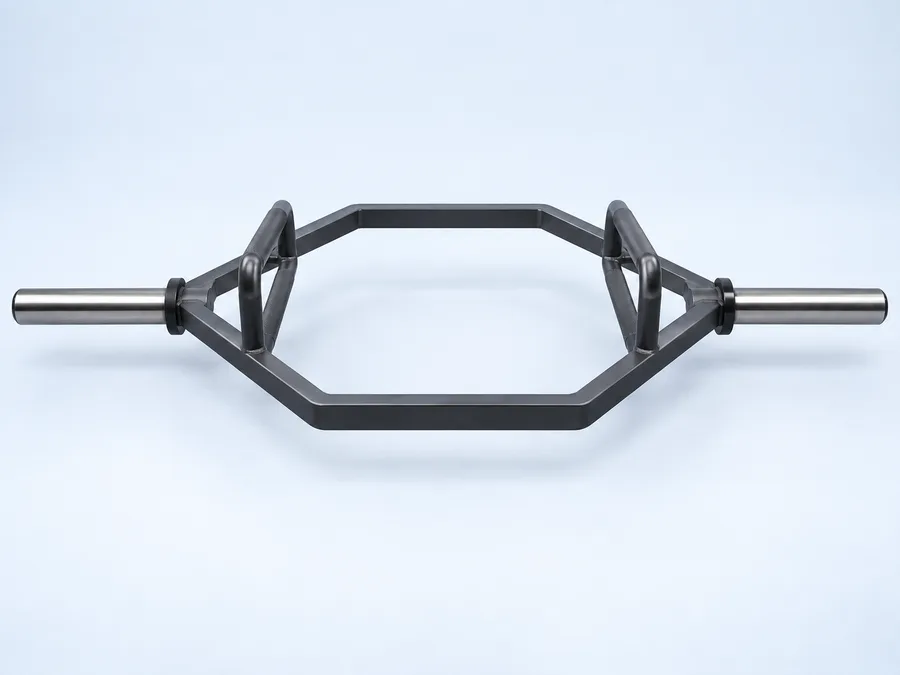
Prioritize 4 × 3 hex-bar deadlifts, then limited assistance work
Build your MDL without sacrificing your SDC and run training.
Session A — Strength
Hex-Bar Deadlift — 4 × 3
Rest 3–5 minutes between working sets.
Choose a challenging load that still leaves about 1–2 clean repetitions in reserve. All three reps should use the same stance, grip, back position, balance, and controlled return.
Do not use a weight that turns the third repetition into a grinder or changes the movement.
Then do:
Forward Lunge — 3 × 6 per side
Use a manageable load for six controlled reps per side.
Session A is the primary strength session for the MDL.
Session B — Power + MDL Practice
Alternate Staggered Squat Jump — 3 × 4–6 repetitions using the Army four-count cadence
Use the Army exercise technique shown below.
Perform this exercise first while the legs are fresh. Keep each jump quick and explosive, land under control, and regain balance before the next repetition.
Hex-Bar Deadlift — 3 × 3
Rest 2–3 minutes between sets.
Use a clearly lighter load than Session A.
Treat this as practice, not a second heavy deadlift day.
Keep all three reps fast and consistent without compromising your next Sprint-Drag-Carry or run session.
How to Choose Your MDL Training Weight
For Session A, use a weight you can complete for all three reps without your form changing.
The Army MDL form standards in ATP 7-22.01 include:
use the same stance every rep;
keep a secure closed grip;
keep your knees controlled;
keep your back and shoulders from rounding;
avoid your hips shooting up first;
stay balanced without stepping;
lower the bar under control.
If all four sets of three look solid, keep that weight or increase it slightly next time.
If the last reps repeatedly look different from the first reps, the weight is too aggressive for that session.
For Session B, use a clearly lighter weight. You should finish the sets feeling like you practiced the movement, not tested your maximum.
All planned reps are consistent
→ Add the smallest practical increase next session.
The last reps lose position
→ Repeat the same weight.
The same form fault returns
→ Reduce the load and fix it before progressing.
Your deadlift work is hurting your SDC, run, or next training day
→ Reduce assistance work first. If recovery is still poor, reduce deadlift volume.
Keep Session B lighter than Session A; do not progress it by chasing load.
Why Train the MDL This Way?
The AFT MDL requires three continuous repetitions, so your training should include repeated heavy reps rather than only single-repetition practice.
FM 7-22 supports heavy, low-repetition strength work with longer rest periods for developing muscular strength.
For ArmyFitHub programming, Session A uses 4 × 3 as the primary strength work. Session B starts with the Army-listed Alternate Staggered Squat Jump, followed by lighter 3 × 3 hex-bar practice.
Do the jump first, then keep the deadlift light enough that it does not interfere with SDC or 2MR training.
ATP 7-22.01 tells Soldiers to know their goal MDL weight before the AFT and to have already lifted that weight in training.
If You Only Have One MDL Day Per Week
If you only have one MDL session that week, keep the deadlift first:
Hex-Bar Deadlift — 4 × 3
Rest 3–5 minutes between sets.
Then:
Forward Lunge — 3 × 6 per side
Then:
Alternate Staggered Squat Jump — 2 × 4–6 repetitions using the Army four-count cadence
With one MDL day, prioritize the hex-bar deadlift over extra assistance work.
If You Are New to the MDL
If you're new to the MDL, start with a light load and consistent reps.
Focus on:
the same stance;
the same hand position;
a secure closed grip;
a strong brace;
a controlled pull;
a controlled return.
If four working sets are too much at first, use fewer sets and build up gradually.
If Your MDL Has Stalled
If your MDL has stalled, first check whether all three reps still look the same.
If your position changes as the weight gets heavier, fix that before adding more load.
If your position stays consistent, keep building strength and check your recovery. Look for the same problem across several sessions before diagnosing a weakness.
If Grip Fails First
Center yourself on the handles and use the closed grip required for the MDL.
The Army's current MDL preparation guidance does not list a separate grip exercise. U.S. Army AFT guidance
If grip repeatedly limits otherwise solid repetitions, treat it as a training constraint rather than automatically adding more deadlift weight.
If You Do Not Have a Hex Bar
Keep training lower-body strength with the equipment you have.
The Army currently lists these exercises for MDL preparation:
Sumo Deadlift
Alternate Staggered Squat Jump
Forward Lunge
See the Army-listed exercises below for technique and source details.
Before test day, practice the actual hex bar at the weight you plan to attempt. See the MDL training weight guidance for how to choose it.
The Week Before Your AFT
Do not try to build new maximum strength in the final week.
Your hard training should already be done.
Avoid:
testing a new 3-rep max;
adding extra heavy leg sessions;
doing unfamiliar high-volume leg work;
choosing a test weight you have never lifted before.
Go into test day rested and use a weight you've already lifted successfully in training.
Common MDL Training Mistakes
Maxing out too often. Most sessions should build strength, not test it.
Adding weight after form has already changed. Fix the movement before making the bar heavier.
Training only single reps. The AFT requires three continuous reps.
Only using a straight bar. Straight-bar deadlifts can build strength, but the AFT uses a hex bar.
Doing too much assistance work. Assistance exercises should help the deadlift, not leave you too tired to train the rest of the AFT.
Ignoring recovery. If one deadlift session hurts the next several training days, reduce the workload.
MDL Training Questions
Should I max out my MDL every week?
No.
Use most sessions to build strength and repeatable technique. Save maximum-effort attempts for times when you actually need to assess progress.
How often should I train the MDL?
Start with 1–2 MDL sessions per week.
If you train twice, use one heavier session and one lighter session.
Should I practice my test weight before the AFT?
Yes.
ATP 7-22.01 says Soldiers should know their goal MDL weight and have lifted it in training.
Do I need a hex bar for every workout?
No.
Other strength exercises can help, but practice the actual hex bar before test day because it is the MDL equipment.
What exercises improve the AFT deadlift?
The U.S. Army currently lists the Sumo Deadlift, Alternate Staggered Squat Jump, and Forward Lunge as exercises for MDL preparation. U.S. Army AFT guidance
Use them as assistance work, but keep regular hex-bar practice in your MDL training.
ATP 7-22.01 provides this MDL warm-up based on your goal weight:
8–10 reps at about 25% of goal weight, or with the empty bar, then rest 2 minutes.
6 reps at about 40%, then rest 3 minutes.
4 reps at about 50%, then rest 4 minutes or until the event starts.
Optional: 1 rep at about 80%, then rest until the MDL begins.
Use the warm-up to prepare for your goal weight without tiring yourself out before the test.
What form problems should make me lower the training weight?
Pay attention to the same problems identified in the Army MDL safety standards in ATP 7-22.01:
knees collapsing inward;
hips rising ahead of the shoulders;
back or shoulders rounding;
losing balance or stepping.
If the same problem keeps appearing as the weight gets heavier, reduce the load until you can control the movement again.
When should I add weight?
Add weight only when all planned reps stay consistent. If position changes, repeat or reduce the load.
Personalized AFT Plan
Build a complete 5-event AFT training plan
Start with your AFT assessment, then get a personalized AFT training plan PDF created from your scores, target, training availability, equipment, and test timing.
The PDF covers all five AFT events, with MDL included as training context.
Start My AFT Plan $24.99 one-time · Reviewed before PDF delivery · Secure PDF by email · Delivered within 24 hours after Plan Setup
The Army lists the Sumo Deadlift as an exercise for MDL preparation. ATP 7-22.02 says it develops lower-body muscular strength and endurance while challenging coordination, balance, and hip mobility.
How to Perform the Sumo Deadlift
1Start in a straddle stance with the feet slightly wider than shoulder width and the toes pointed outward.
2Lower under control to take the weight between and in front of the legs, then drive through the floor to stand tall.
3Finish balanced and reset the stance and trunk position before the next repetition.
Key Cues for the Sumo Deadlift
Brace before the pull.
Keep the load controlled through the range of motion.
Set the feet slightly wider than shoulder width with the toes pointed outward.
Common Mistakes in the Sumo Deadlift
Using a load that cannot be controlled throughout the range of motion.
Losing balance or changing the stance between repetitions.
Why the Alternate Staggered Squat Jump Helps the MDL
The Army lists the Alternate Staggered Squat Jump as an exercise for preparing for the MDL. ATP 7-22.02 uses the movement to develop explosive lower-body action, coordination, balance, movement skill, and anaerobic endurance.
How to Perform the Alternate Staggered Squat Jump
1Begin in a staggered stance with the left leg back, arms at the sides, and the trunk slightly flexed forward.
2Squat and touch between the legs with the left fingertips, then jump forcefully and switch legs in the air to land with the right leg back.
3Repeat on the opposite side, then return to the starting stance after the final count.
Key Cues for the Alternate Staggered Squat Jump
Use a slow cadence for precision, but make each jump quick and explosive.
Land softly with the feet facing forward.
Keep the trunk aligned and regain balance before the next jump.
Common Mistakes in the Alternate Staggered Squat Jump
Rounding the back or losing the slightly forward trunk position.
Landing hard or with the feet turned away from the front.
The Army lists the Forward Lunge as an exercise for preparing for the MDL. The movement develops unilateral lower-body strength, balance, and trunk control.
How to Perform the Forward Lunge
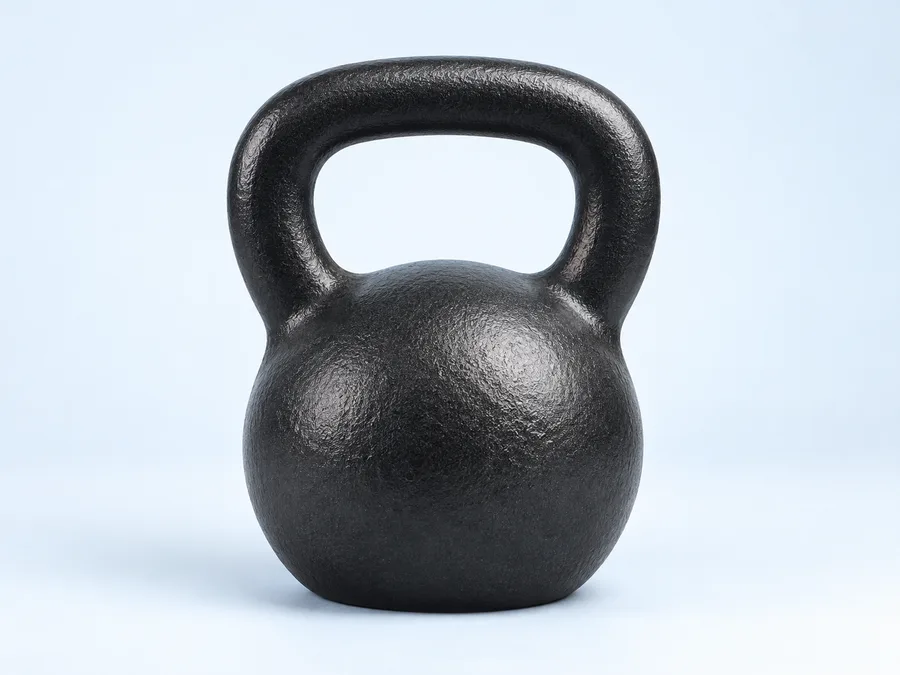
1Start in a straddle stance with the kettlebells at the sides in a neutral grip.
2Step forward, lower until the forward thigh is parallel to the ground, and bring the weights to either side of the forward leg.
3Push through the forward leg to return without jerking the trunk, then repeat on the other side.
Key Cues for the Forward Lunge
Keep the forward heel flat and the rear heel lifted.
Keep the forward knee over the ball of the foot.
Brace the abdominals and lean slightly forward with a straight back.
Common Mistakes in the Forward Lunge
Letting the forward knee drift or the rear knee touch the ground.
Jerking the trunk backward to return to the starting stance.